
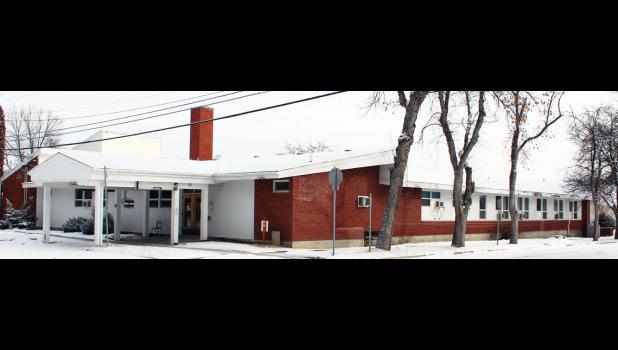
Mold, asbestos found at old hospital in 2005 unknown factor presently
Should the Stillwater County Commissioners move forward with placing county offices in the old hospital building, the issue of asbestos, mold and PCB light ballasts found in a study done 10 years ago could come into play.
In 2005, a study was performed on one wing of the building by Northern Industrial Hygiene, Inc., for the Stillwater Community Hospital. The purpose of the study was to identify ”friable and nonfriable suspect asbestos-containing building materials (ACBM), to identify and assess mold-impacted building materials and components, and to identify fluorescent light fixtures, tubes and PCB ballasts,” according to the study.
More specifically, the study was intended to “determine the impact of these materials on the renovation design, and to identify materials that might present health risks to renovation workers,” according to the study.
At that time Stillwater Community Hospital was preparing for onsite renovation/expansion. Those plans were scrubbed by the financial impact on building supplies and costs caused by Hurricane Katrina.
The study found the following:
•Of the 27 suspected asbestos-containing building materials sampled, seven contained asbestos, including the asphalt roofing material, straight run insulation on the heating and domestic lines, the mudded pipe fitting for domestic lines, the boiler breeching and floor tile.
•Elevated levels of mold were present in the attics and the hallways beneath the attics, including the upper portion of the roof trusses.
•Five of the six different types of fluorescent light fixtures had ballasts that contained PCBs. There were a total of 88 fluorescent PCB-containing ballasts.
The asbestos abatement cost estimate at that time was $28,709.
Northern also recommended that before any of the asbestos containing materials were disturbed, that an accredited asbestos abatement designer design a plan and that once the work is done, a third party be brought in to make certain all materials were in fact successfully removed and the air quality was at an “acceptable level,” according to the report.
Northern also recommended that the entire facility be evaluated for mold and the roof trusses either be sanded or removed.
The report notes the scope of study is solely for the Stillwater Community Hospital.
Why it matters now
It is unclear if anything has been done about the issues raised in the report.
Commissioner Maureen Davey said this week that “the county has not been given any further information on this inspection report from the hospital.”
The county owns the building and had leased it to the hospital. In August the commissioners approved the hiring of an appraiser for the old hospital as well as the Meadowlark Assisted Living Center, which is attached to that building. Two reasons given for seeking the apprasial were first, in the event the county wanted to sell the building and secondly, it would make suitable office space for the county.
That is one of four options presented to the public earlier this year.
The county has outgrown the current courthouse, with some offices already offsite. Additionally, the aging building is not ADA compliant. The four options presented are as follows:
•Alternate 1: Remodeling the old hospital and the first floor of the current courthouse: $6.37 million
•Alternate 2: Remodeling the current courthouse and construction of a new law & justice facility at the courthouse: $15.32 million
•Alternate 3: Remodeling the current courthouse and construction of a new law & justice facility on a new site: $17.17 million
•Alternate 4: Completely new county facilities on a new site: $17.54 million. A public hearing was held on May 7 and the written public comment period closed on May 19. As of the close of the public comment period, no letters had been filed in the Clerk & Recorder’s Office expressing support for Alternative 1, which is the only alternative that involves the old hospital. No one spoke in favor of using the old hospital at the public hearing.
The 2005 report is available for review in the Cler & Recorder’s Office.