
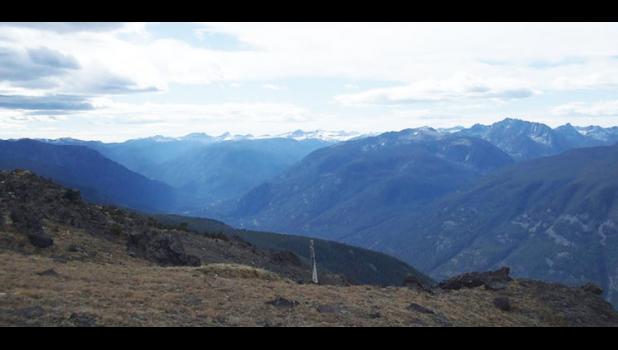
Protecting the Beartooths from Bakken problems
A first look at a citizen-initiated zoning petition aimed at addressing environmental impacts by gas and oil activities along the Beartooth Front was presented to the Stillwater County Commissioners on Nov. 10.
The intent is not anti-oil or anti-gas development but rather to establish reasonable regulations to protect the Beartooth Front, Nye-area resident Kayce Arthun said on behalf of the group of citizens who spent the past year and a half gathering signatures for the petition.
More than 60 percent of the property owners who collectively hold more than 50 percent of the proposed zoning district’s land mass have signed the petition, the group said.
The county commissioners did not take action on the petition as it must first undergo a lengthy vetting process to verify signatures.
Petition goals
According to the petition’s introductory document, the petition “seeks to maintain the rural residential and agricultural character of the district,” including “ranching traditions; pristine air, rivers, streams; and stunning day and night views of the Beartooth Mountains in their natural state.”
The petition calls for requiring permits that include fees and an “impact assessment” report prior to drilling. A key goal is to prevent “cost shifting” by using fees and regulations to direct impact costs to oil and gas operators, not local governments, the document states.
“The petition is not ‘anti-job’ or ‘anti-oil and gas activity,’” the document states. “Instead, the petition seeks to fairly allocate those costs to the oil and gas operator who enjoys the benefits of oil and gas activity.”
Among the concerns listed in the petition document are ground or surface water pollution; depletion of water resources; air pollution caused by flaring or venting; soil pollution; impacts to the health of humans, animals and agricultural products; a decline in property values; cost shifting to the local government; increased housing prices caused by the influx of workers; and fundamental changes to the area’s rural and agricultural lifestyle.
The petition calls for establishing a seven-member planning commission to establish the regulations and a five-member commission to advise the planning commission.
Proposed regulations include controlling lighting; landscaping to contain discharges or spills; monitoring water quality, odors, glare, heat, noise, vibration, dust or smoke; limiting visual landscape impacts; prohibiting holding ponds for drilling or waste materials; and restoration.
Making the case
Getting the petition ready for the commissioners wasn’t easy, the group pointed out. The proposed 79,500-acre zoning district in the Stillwater and Rosebud drainages has more than 600 property deeds, some with multiple owners and some with out-of-state or even out-of-country owners, Nye landowner Hank Lischer said.
The group didn’t have clear rules to follow for gathering signatures and was willing to work with the county in verifying the petition, Lischer said. But establishing reasonable oil and gas regulations is important – the extractive industries “do not have a pretty history,” he said.
Included in the three 3-ring binders presented to the commissioners was an opinion letter from Bozeman attorney Susan Swimley stating that county commissioners have the authority to regulate oil and gas activities, Lischer said.
Kevin Chandler, a scientist for the Montana Bureau of Mines and Geology, speaking as an expert and not a supporter of the petition, said concerns about negative impacts by oil and gas activity in the Bakken region are “well documented,” but he wasn’t opposed to hydraulic fracturing so long as it’s done properly.
“A big concern is where the wastewater goes,” he said. “It’s 30 times saltier than seawater and can destroy agricultural land.”
Julia Haggerty, a resource geographer with the Montana State University’s Earth Science Department, also spoke as an expert and not a supporter of the petition.
Citing research by herself and others, Haggerty described the difficulty rural governments and economies have in capturing jobs and revenue from oil and gas activities. The work requires specially trained workers, so they are often brought in from outside the area, she said.
One study she cited indicated that about 87 percent of the money that goes into oil and gas development leaves the immediate area. Another showed that oil and gas tax revenues accrue long after development is completed, meaning counties have to “play catch up” to address impacts.
When Commissioner Maureen Davey asked whether oil and gas activity along the Beartooth Front would grow to the level of the Bakken, Chandler said the fractured geology and heavier oil here indicates the answer is no.
But Fishtail landowner Burt Williams noted that a Montana Department of Natural Resources chart indicates that when the price of oil goes up, interest in the Beartooth Front area also increases.
Arthun, who grew up in the Limestone area, described how her grandmother Mary Donohoe presented a similar zoning petition to the county commissioners in the 1970s – but the issue was hard rock mining. The commissioners agreed with the petition, she said.
“It wasn’t the death of hard rock mining,” Arthun said. “It’s been a successful partnership ever since.”
Davey concluded the meeting by noting that the public comments were “the voice of the people” but a long process lay ahead.