
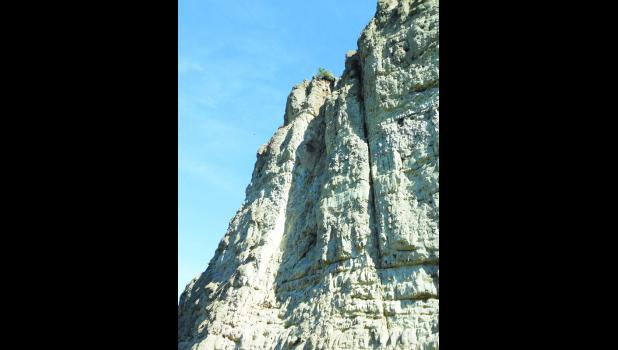
Estimate for Stillwater River Rd. rockslide fix escalates
The estimated cost for stabilizing the cliff face above the Stillwater River Road near Midnight Canyon has increased significantly.
The Stillwater County Commissioners met Aug. 11 with a representative of GeoStabilization International at the site of the rockslide that closed the road since June 3. The company sent a new estimate to the county on Aug. 13.
GSI’s previous estimate for scaling, bolting and rock netting came to about $1.5 million. The new estimate does not include netting, but the cost of scaling and bolting is “significantly higher,” Commissioner Gerald Dell said.
The actual figure is blacked out in GSI’s Aug. 13 letter for proprietary reasons and because the project must go out to bid, Dell said. The offer is good for 30 days and does not include traffic control, construction permits, hauling away materials and construction surveying.
The offer is “contingent on the site not changing significantly prior to our mobilization,” GSI said in its letter, which described hazards posed by the unstable cliff face above the road.
“Remaining on the slope is a very large rock mass in the shape of a wedge,” GSI’s letter states. “This large unstable mass is a significant hazard to road users, the adjacent river, and potentially nearby dwellings across the river.”
Removing the wedge by blasting, a typical solution, “is not considered feasible,” the letter states, because vibrations from the blasting could cause the entire wedge to come down.
“Given the significant volume of material and limited space to waste the debris, this remediation option was not considered as viable,” the letter states.
GSI recommended using an array of grouted rock dowels to stabilize the wedge structure. After scaling had removed loose rock fragments, crews could work from the top-down for safety reasons, drilling and installing the rock dowels as they went.
GSI noted that their estimate was based on a one-day site visit, and thorough geological and engineering analysis was needed to further refine design and costs. The actual work could take three to four months of continuous operation, preferably next spring, the letter stated.