
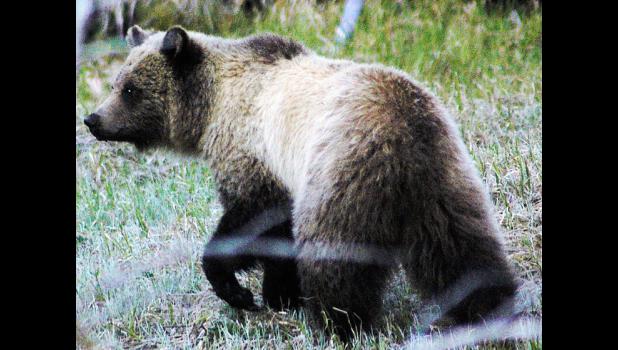
Benbow grizzly killed
The nearly month-long effort to catch a cattle-killing grizzly bear in the Benbow area has come to an end.
The bear, known as grizzly No. 822, was shot by federal Wildlife Services last Thursday morning as she crossed a small opening in upper East Fiddler Creek, said Montana Fish, Wildlife & Parks biologist Shawn Stewart.
“She had been staying in that drainage for the last several days allowing Wildlife Services to concentrate their efforts,” said Stewart. “It appeared that the bear was following her usual habit of moving to low elevation during the night and returning to the upper slopes during the day. But she seemed to be moving up a bit later than normal on Thursday.”
Wildlife Services at last found some luck and was in the right place at the right time.
The bear’s first known cattle kill occurred on Aug. 14 and the last was on Sept. 20. In all, the sow had 12 confirmed depredations on six ranches in the Fishtail/Fiddler Creek area
Problem bear, smart bear
When the bear showed up in Stillwater County, she had already been fitted with a GPS radio collar after being trapped east of Red Lodge in late July due to her suspected involvement of cattle predation there. The bear was relocated to the Gallatin River, south of Bozeman, and was caught in a research trap in the Gardiner area, released again and by Aug. 11 was in the Silver Lake area in the Beartooth Mountains, said Stewart.
She became FWP’s and Wildlife Service’s top priority once the Stillwater predations took place, and for several weeks, eluded capture but not returning to kill sites and seeming to sense where traps were set along her travel routes.
“Wildlife Services staff deserve a lot of recognition for their perseverance over the last month,” said Stewart. “Thanks also go to the local landowners who remained cooperative and supportive during these difficult days.”
FWP and Wildlife Services work cooperatively in these cases, with FWP monitoring the locations of bears and providing ground support to Wildlife Services as needed.